
The education system has a duty of care for children and young people, and it also has a duty of care for educators. This report argues that these responsibilities are inseparable. Preventing gendered violence is essential to fulfilling schools’ obligations as both workplaces and places of learning, and to ensuring every member of the school community is safe, respected and able to flourish.
This new research was conducted by Monash University, and the report was commissioned by the Australian Education Union (AEU). This is Australia’s largest study of misogyny and gendered violence in Australian schools, where 2,668 AEU members were surveyed. The findings highlight the depth of the issue, including the growing influence of the manosphere on students, and the significant risk of teachers leaving the professions due to misogyny and gendered violence.
This International Workers’ Day, we are asking a simple question: how can workplaces be safe if workers are being silenced?
A dedicated May Day 2026 webpage is now live and outlines four actions to help spread the message and mobilise support. We encourage all Centres to include these actions on your own websites and channels as part of the broader digital campaign.
Watch our campaign video. Through the voices of victim survivors, Our Silence Is Not For Sale shows the real impact of non-disclosure agreements in cases of workplace sexual harassment and discrimination.
This campaign is led by our advocates and informed by our network of lawyers, educators, and policy leaders. It reflects what we see every day: women trying to speak up about unsafe workplaces and being asked to stay silent instead.
Working Women’s Centre Australia is marking May Day by calling for urgent national law reform to end the misuse of non-disclosure agreements in these cases.
If you want to be part of the campaign and help spread the message, there are several ways you can take action to prevent and end workplace sexual harassment and discrimination. Find out more about the May Day 2026 actions here. Find out more here about May Day 2026 actions.
This International Workers’ Day, the national body of Working Women’s Centre Australia is launching the digital campaign Our Silence Is Not for Sale. This campaign sets out key escalation points to build external pressure by engaging the public and encouraging action from Government decision makers to end the misuse of non-disclosure agreements.
A dedicated May Day 2026 webpage is now live and outlines four actions to help spread the message and mobilise support. We encourage all Centres to include these actions on your own websites and channels as part of the broader digital campaign.
The campaign video featuring lived experience advocates is now available on the website. Centres are welcome to use it across your digital channels, at conferences, and in meetings with politicians, community groups, unions, partner organisations, and service providers. It can also be used in workshops, community events, training sessions, and local outreach activities. It will also be shared on LinkedIn on May Day. Centres will be tagged and are encouraged to repost the content.
A full digital campaign toolkit is available on the Hub under the NDA campaign folder in the digital campaign section. All materials are ready to download and use, including:

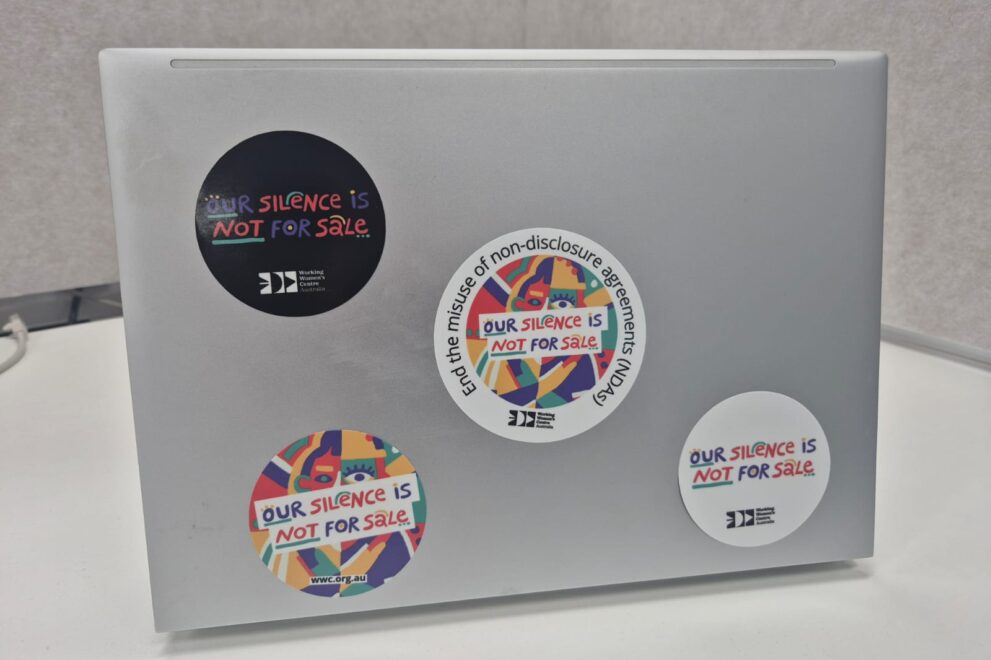
These resources are designed to support a coordinated national approach and make it easy for Centres to participate.
We strongly encourage all Centres to take part in this campaign and help spread the message. You can do this by:
This will support consistent messaging across Centres and increase engagement with the campaign.
If you Centre need any support or would like to discuss how to use these materials, please reach out to the National team.
We honour the life and legacy of Trish Crossin AM, a fierce advocate for working women and a foundational figure of the Northern Territory Working Women’s Centre.
Trish was a founder of the NT Working Women’s Centre and her commitment to the Centre was absolute. She understood what the NT WWC meant for Territory women, particularly those facing isolation, discrimination and insecure work, and she would not accept a future where the NT WWC did not exist.
Trish played a critical role in securing and protecting funding for the NT Working Women’s Centre at times when its future was uncertain. She was relentless. Trish was known for turning up, pushing hard and refusing to leave offices.
She did not accept vague assurances or half answers. She stayed, pressed and negotiated until WWCs were properly funded because she knew how essential the service was for women across the Territory.
That same determination shaped her contribution to the broader movement. As a member of our national governance committee, Trish was helping establish Working Women’s Centre Australia as a national body, always bringing the NT perspective and her years of experience working with WWCs across the country. Trish was passionate about WWCs having an open door, to all women, no matter their circumstances at work.
In 2023, Trish delivered a keynote address at the NT Working Women’s Centre thirtieth anniversary that left a lasting impression on me. She spoke passionately about the Territory, the early days of the NT Centre and the hard fought battles to build and protect it.
Trish spoke powerfully about the battles women faced in building and sustaining Working Women’s Centres. She questioned the logic and fairness of having to repeatedly battle for funding, as though the value of the work needed to be proven over and over again. She described women doing countless unpaid hours, often while raising children, managing families and holding down jobs, working tirelessly to argue their case to departments, politicians and communities simply to keep these vital services alive.
I learned a great deal from hearing that history told so powerfully, and I was especially keen to share this history with the the new WWC network, as we had just welcomed five new Working Women’s Centres.
After her speech, I approached Trish to ask whether I could have a copy of her speech, so that the history she shared could be documented and shared across the network. Trish laughed and said yes, then showed me her notes. They were just three illegible dot points. Trish confirmed that she could not even read the bullet points, she had prepared.
Trish was speaking from the heart, telling the story of the NT Working Women’s Centre and has the room captivated. She was, of course, well practised at public speaking, but telling a story with such honesty, depth and connection is something else entirely.
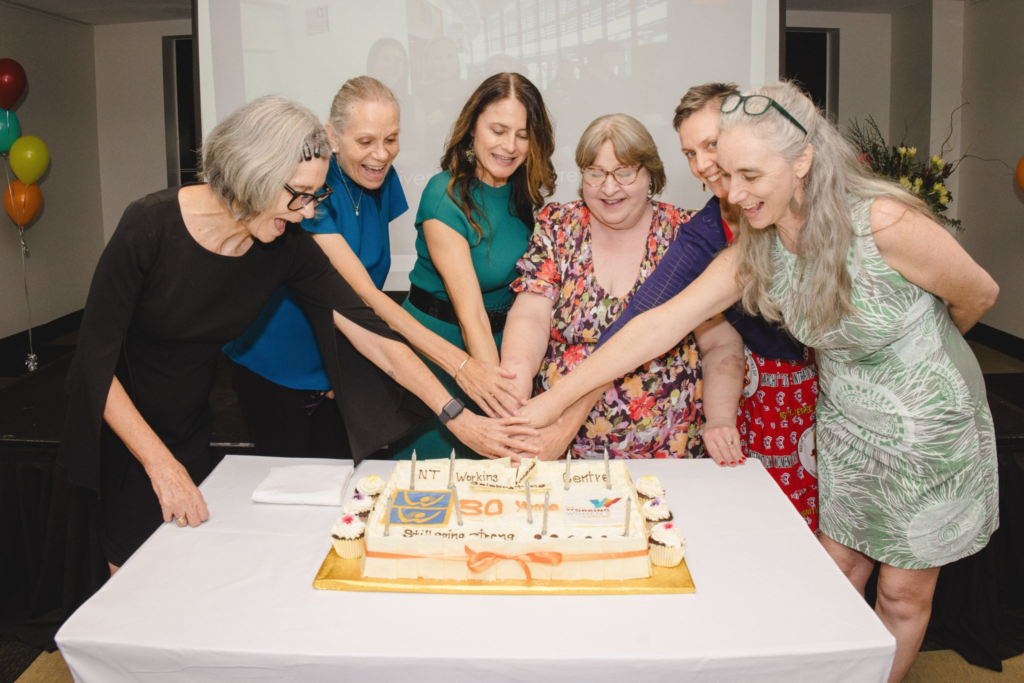
As the first female Senator for the Northern Territory, Trish was tough, whip smart and principled. She spoke her mind clearly, but she also listened to difference and platformed people who were not always noticed.
The legacy of Trish Crossin AM lives on through the NT Working Women’s Centre, the national Working Women’s Centre network, and the countless Territory women whose working lives are safer and fairer because she did not give up, worked late and didn’t leave the room until WWCs were funded.
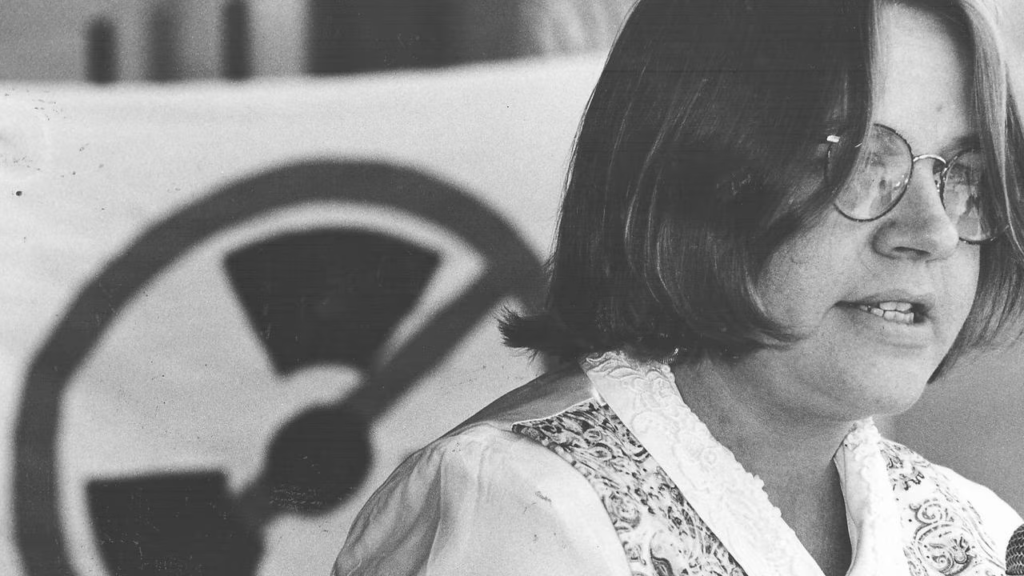
A young Trish photographed in front flag.
Our hearts are with Trish’s husband Mark, her son Paul, and her daughters Melinda, Amanda and Kate.
Trish often spoke to me about how deeply proud she was of her children. Knowing who I am, and who Trish was, our conversations naturally turned to her daughters and their work. It was clear to me that Trish’s legacy extended beyond her community and the Working Women’s Centres. She had also passed on her strong sense of justice, courage and conviction to her children. She was so proud.
Vale Trish.
Words by Abbey Kendall, CEO Working Women’s Centre Australia
The call to action in support of our national campaign to end the misuse of NDAs in resolving workplace sexual harassment and discrimination complaints Our Silence is Not for Sale is growing in Australia.
Last week Working Women’s Centre Australia, alongside Working Women’s Centre NSW had the opportunity to speak to the Federal Government at Parliament House on why national legislative reform to address this systemic problem is urgently needed.
We were honoured to be joined by lived experience activist Leanne Kirkaldie who shared her powerful story and insight on the issue and the solution.
Working Women’s Centres across Australia are calling for national law reform that regulates NDAs in the following way:
It gives women agency in their workplace:
Victim/survivors must be given genuine and proper agency when resolving a workplace sexual harassment or discrimination dispute, with the support of an independent lawyer
It stops the silencing of women:
Victim-survivors should be able to disclose and speak about their workplace experiences to their family, friends, support persons, the police, medical and legal advisors, and their trade union. Employers must address issues and take preventative steps to stop sexual harassment and discrimination in the first place. To do this, we have to stop the silencing of women.
It is practical and holistic:
The legislation must provide a pathway for further advocacy to eliminate sexual harassment and discrimination in workplaces. This includes ensuring there is proper resourcing for education, reporting and compliance at an industry and workplace level.
We thank the Federal Government, specifically the Status of Women Caucus Committee, for the opportunity to discuss our key recommendations to regulate the use of NDAs in Australia.
For more information on the campaign and Working Women’s Centre Network’s key recommendations, please visit the NDA campaign page.
At the International Women’s Day rally in Tarntanya (Adelaide) this weekend, Aira Firdaus, Advocacy and Policy Officer at Working Women’s Centre Australia, spoke about the urgent need to end workplace sexual harassment and the misuse of non-disclosure agreements (NDAs).
In her speech, Aira highlights the reality many workers still face today: unsafe workplaces, the silencing of survivors, and systems that allow harassment and discrimination to continue. She also speaks about the growing movement to end the misuse of NDAs — a key focus of the Working Women’s Centre national campaign Our Silence Is Not For Sale.
Real change is only possible when workers speak out, stand together, and demand accountability.
Watch the video to hear Aira’s speech and learn why ending the misuse of NDAs is critical to creating safer workplaces for everyone.
Learn more about the Our Silence Is Not For Sale campaign.
This weekend, at the International Women’s Day rally in Tarntanya (Adelaide), our colleague Aira Firdaus, Advocacy and Policy Officer, spoke about the ongoing fight to end workplace sexual harassment and discrimination, and about our national campaign Our Silence Is Not For Sale.
Her speech highlighted the progress being made through advocacy and law reform, including recent legislation in Victoria addressing the misuse of non-disclosure agreements (NDAs), and the need to continue pushing for change across Australia.
Watch the video to hear Aira’s speech advocating for our national campaign to end the misuse of NDAs and support safer workplaces for all workers.
As International Working Women’s Day 2026 approaches, we want to ensure everyone across the Working Women’s Centres Network is aware of the events taking place in each state and territory.
This is an important opportunity to stand alongside unions, community partners and supporters to call for safer workplaces, real equality and respect for every woman.
We encourage Centres to:
Below is a national snapshot of confirmed events.
Hobart
International Women’s Day Rally
When: 2 March | 12.30 pm
Where: Franklin Square
Melbourne
International Working Women’s Day 2026
When: 6 March | 12pm
Where: Lygon Street outside Victorian Trades Hall Council – 54 Victoria St, Carlton
Darwin
International Women’s Day Walk and Celebration
When: 7 March | 8am
Where: CDU Danala Campus (City) – 54 Cavenagh Street, Darwin
Adelaide
International Women’s Day March
When: 7 March | 10.15am
Where: Tarndanyangga (Victoria Square)
Brisbane
WWQ International Women’s Day Breakfast 2026
When: 10 March | 7am
Where: The Ballroom at Victoria Park / Barrambin- 309 Herston Rd, Herston
Perth
Balance the Scales- International Women’s Day 2026
When: 11 March | 11am
Where: Palace Tower, Boorloo Room Ground Floor
Sydney
International Women’s Day 2026
When: 13 March | 5pm
Where: Town Hall Sydney – 483 George St.
If you’re organising or attending another International Women’s Day event that isn’t listed, please contact us to add an event to our listing.
Working Women’s Centre Australia is contributing to the national conversation on workplace safety and gender equality.
Our Policy and Administration Officer, Kirsty Faulder, has written a powerful piece for Women’s Agenda calling for sexual harassment to be recognised and treated as what it truly is: a preventable workplace safety hazard under Work Health and Safety (WHS) laws — not merely an individual complaint under anti-discrimination frameworks.
This national media coverage amplifies our advocacy for systemic reform and highlights our strong commitment to preventing workplace gendered violence. To read the full article, “No More Silence: Treat Sexual Harassment as the Safety Hazard It Is,” click here.
To make it easier for everyone to use the Hub confidently and consistently, we’ve created three practical one-page guides to support navigation across the platform and the publishing of news and events.
These guides are designed to help you quickly find what you need, share updates from your Centre, and contribute to collaboration across the Working Women’s Centres Network.
How to navigate the Hub area
A quick overview of the Hub layout, key tabs, and where to find resources, campaigns, Events, and News.
Access here: How to navigate the Hub area
How to create an event on the Hub
Step-by-step guidance on how to publish local or national events, including what information to add and how to make sure your event appears correctly in the calendar.
Access here: How to create an event on the Hub
How to create a News post on the Hub
A simple guide to publishing News posts to share updates, good practice, campaign milestones, reflections, and learnings with the wider network.
Access here: How to create a News post on the Hub