

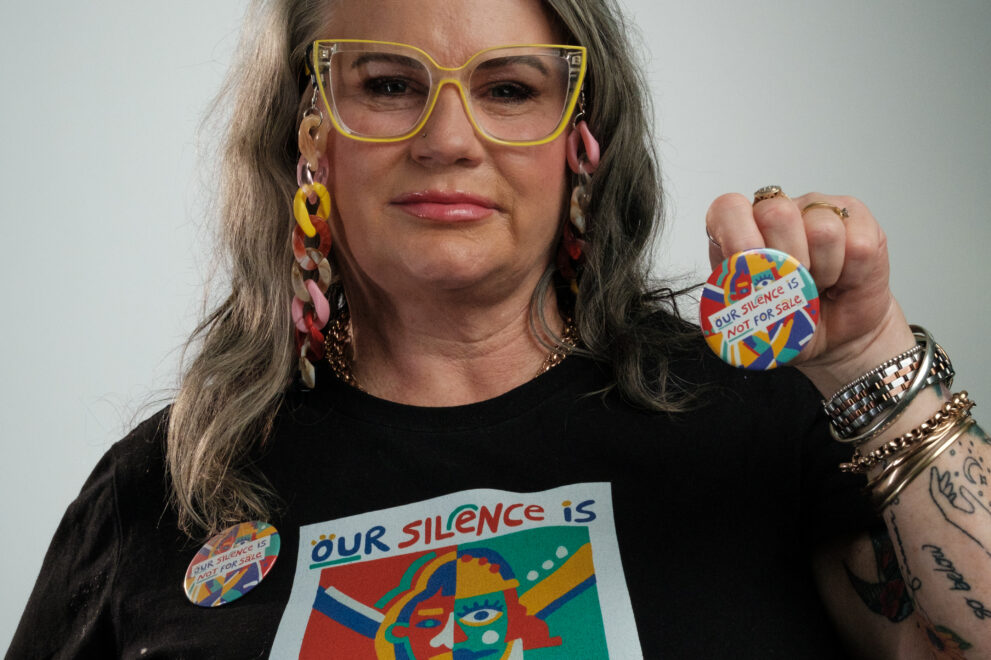
This International Workers’ Day, we ask: how can workplaces be safe if workers are silenced?
Join the campaign and help us spread the message.
Here are a few ways you can take action to end workplace sexual harassment and discrimination, to demand for strong laws in Australia that will end the silencing of women.
Politicians receive thousands of letters from organisations and individuals wanting their attention and asking them to do something on a range of issues. For this reason, and to stand out, we are asking our supporters to ask for a meeting with your local federal member of parliament. We know meeting them is a powerful way to become more visible and get your message across. We have prepared an example letter template for you to request a meeting with your local Federal MP or Senator – use it as a guide, but make sure your letter is personal and in your own words.
To find your Federal MP, go here, type in your postcode, click the MP’s name, then click on the ‘Connect’ tab to see their contact details.
In your letter, remember to:
Tip: Before you ask them for a meeting, check the sitting calendar. On sitting days your Federal MP will be in Canberra and may not be able to meet you locally.
Post it on your social media using the hashtag #OurSilenceIsNotForSale and tag your local Federal MPs or Senators, the Prime Minister Anthony Albanese MP (@albomp), Attorney-General Michelle Rowland MP (@mrowlandmp), Minister for Women Senator Katy Gallagher (@senkatyg), and Minister for Employment and Workplace Relations Amanda Rishworth MP (@amandarishworth)
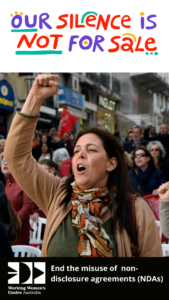
1.Save as the image of the campaign frame here and use it to add your photo inside the frame.
2. You can also download the campaign photos featuring advocates like Anna, Kaz and Siobhan here to share on your social media.
Share your photo or the advocates photos on social media using #OurSilenceIsNotForSale and tag your local Working Women’s Centre, using the suggested caption below:
For far too long working women have been silenced from speaking up on workplace sexual harassment and discrimination. The misuse of NDAs in Australia must end now. #OurSilenceIsNotforSale
Here are some images to inspire you to create your own photo using the campaign frame.
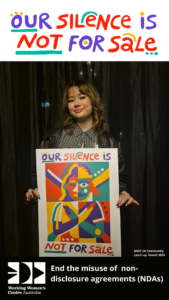
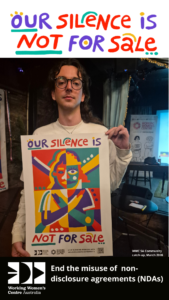


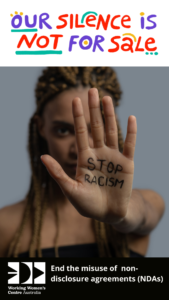


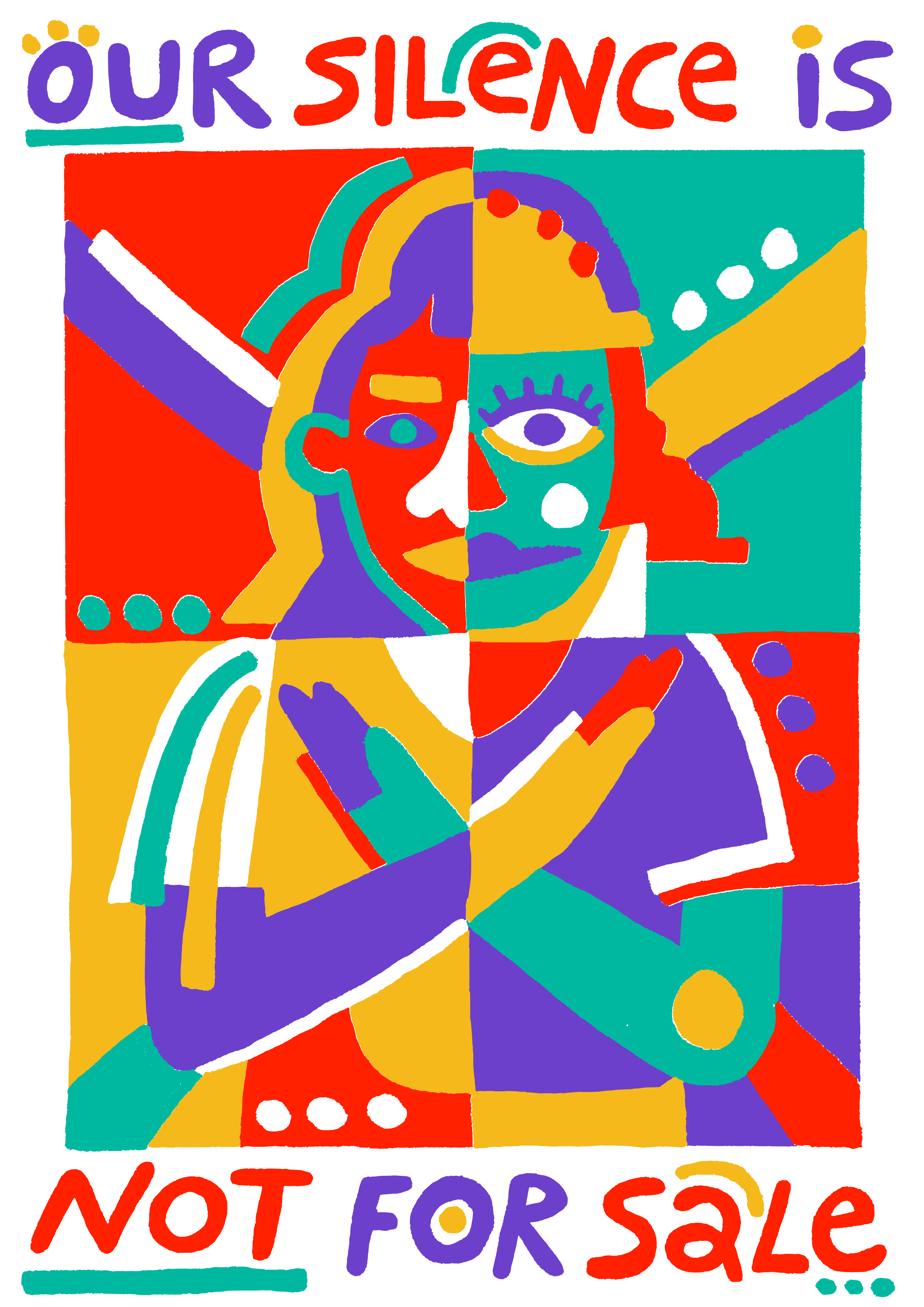
Print and display our poster in a visible place such as a staff room, corridor or window. You can also take a group photo with the poster and share it on your preferred social media using #OurSilenceIsNotForSale and tagging your local Working Women’s Centre.
Download the poster for your home, workplace or school here.
If you are a member of a trade union, speak to your union delegate or union organiser about this issue and why you think there is an urgent need for national legislative change.
Disclaimer: There may be a variety of reasons you wish to come forward and share your experience — sharing your story can be an important way of healing, help to hold the perpetrator to account and increase awareness about sexual harassment and discrimination. However, before starting this journey, it is important to be aware that doing so may give rise to a defamation claim against you, as well as having other potential consequences for your wellbeing. If you are in a situation where you wish to speak about your experience of sexual harassment and/or discrimination, whether through official or unofficial channels including social media, we strongly recommend that you seek legal advice about potential risks of defamation before doing so.