Sexual harassment and discrimination at work should be treated as a preventable safety hazard under Work Health and Safety (WHS) laws — not just as an individual complaint under anti-discrimination frameworks.
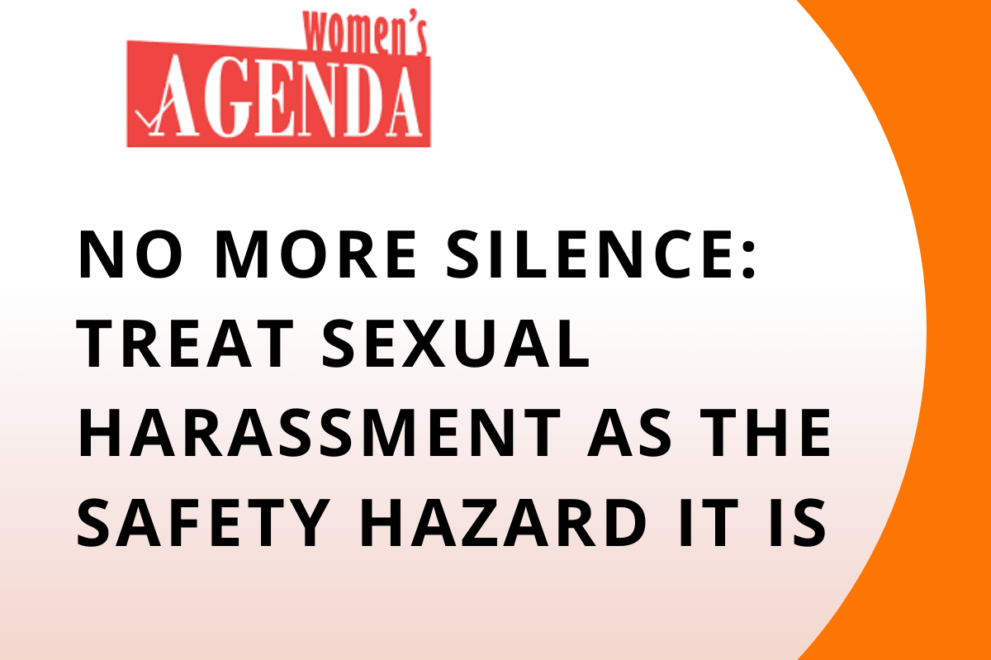
The current system relies too heavily on individuals to come forward, placing the burden on workers to take personal and professional risks. Our Policy and Administration Officer, Kirsty Faulder, has written a piece for Women’s Agenda calling for sexual harassment to be recognised for what it truly is: a preventable workplace safety hazard. To read the full article, “No More Silence: Treat Sexual Harassment as the Safety Hazard It Is,” click here.
In parallel, a national joint submission titled Safety Regulation for Primary Prevention of Gendered Violence has been submitted to Safe Work Australia as part of the Best Practice Review. The submission was led and extensively coordinated by Sapphire Parsons in her capacity as Co-Chair of the Law Reform Committee for Victorian Women Lawyers. Through strong national leadership and coordination, Sapphire brought together more than 30 organisations and peak bodies in a significant cross-sector collaboration.
The submission calls for explicit regulatory reform to ensure gendered violence — including sexual harassment — is recognised and addressed as a workplace safety hazard under WHS laws. It reinforces the growing consensus that prevention must be embedded within safety regulation itself, shifting the burden from individual complaints to systemic employer obligations.
Working Women’s Centre Australia is also campaigning to end the misuse of non-disclosure agreements (NDAs) and other unjust tools that silence women across Australia in cases of workplace sexual harassment and discrimination.
If you would like to be part of this movement, find out more about our Our Silence Is Not for Sale campaign here.
Sexual harassment and discrimination should be addressed like any other workplace hazard — proactively, collectively, and with strong enforcement powers.