Working Women’s Centres were founded by feminist unionists, and we’ve worked alongside unions for fifty years.




The women’s movement gains momentum, demanding political, social, and economic equality.
In 1951, the Australian Government became a signatory to an International Labour Organisation convention on equal pay but did not ratify this convention into domestic law. It wasn’t until the rise of the women’s movement and its demands for political, social and economic equality in the sixties that Australian women workers were legally granted equal pay for equal work by the Australian Conciliation and Arbitration Commission in 1972.
The Women’s Electoral Lobby (WEL), founded in Melbourne in 1972 (and still active in feminist advocacy today), was pivotal in the politicisation of many women. There was a large cross-over of WEL women and women involved in the early development of WWCs, many of whom were feminist unionists.
In 1972, the Australian Conciliation and Arbitration Commission grants women equal pay for equal work.
An Arbitration Commission decision to extend the adult minimum wage to women workers.
International Year of the Woman
An International Women’s Year seed grant, with ongoing support from the National Women’s Advisory Council, enabled the establishment of the pioneering Melbourne Working Women’s Centre.
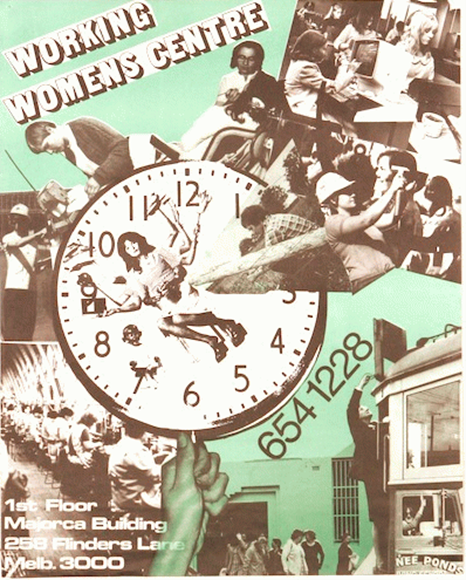
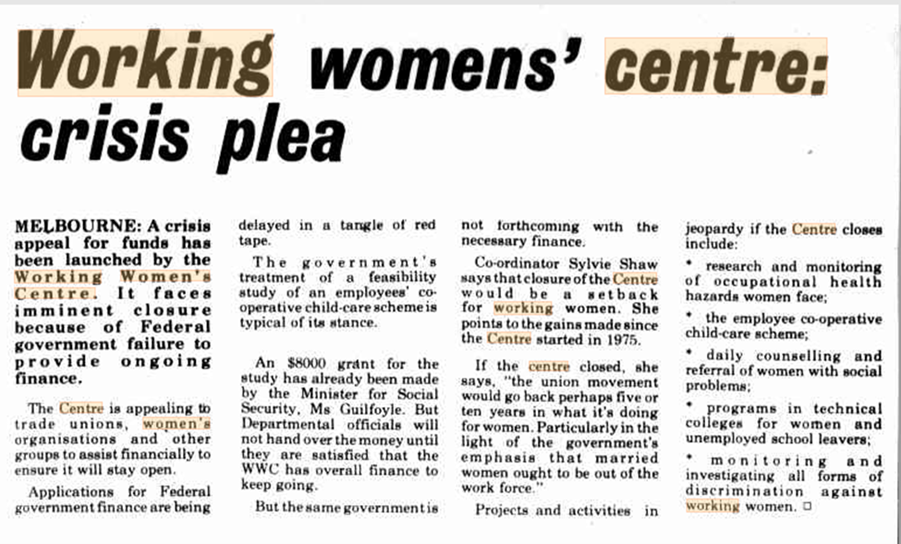
The Melbourne Working Women’s Centre was the first feminist/trade union women’s research and advisory centre focused on women’s issues in employment in Australia. It was set up under the auspices of the Women’s Committee of the Australian Council of Salaried and Professional Association, with a budget of $40,000, two paid full-time coordinators and two part-time migrant liaison officers
The Centre’s founding coordinators, feminist unionists Mary Owen and Sylvie Shaw, were influential on the national political front. They wrote discussion papers and monthly bulletins outlining the latest political activism, research and wins from across the world in relevant areas of women’s employment.
A multilingual poster was the Centre’s first publication followed by a discussion paper on the particular needs of migrant women. The centre’s influential periodical Women at Work saw a growth in circulation numbers from 6000 subscriptions in 1977 to 13,000 in 1982.
The Centre’s activities ranged from researching issues affecting women in the workforce to running training programs dealing with women’s work issues (OH&S, workers’ comp, trade union training, dealing with discrimination etc.) It gave expert evidence in industrial tribunals, lobbied governments and unions for changes to women’s position in the workforce, participated in government committees dealing with social security and job training etc, helped establish transition programs (at TAFE colleges) for women wishing to return to the workforce, spoke regularly at workplaces, conducted research on shift work, child care and occupational health problems including stress among ‘blue collar’ women workers, and developed a Register of Women in Non-Traditional jobs made up of women who would go to schools and community groups to talk about breaking the ‘traditional ‘workforce mould.
The Centre was instrumental in developing the Working Women’s Charter (which was based on a similar charter in the UK).
The Centre’s charter included the following demands:
Other demands included community-based childcare centres and the removal of all restrictions to abortion and availability to all of sex education and birth control advice.
Charter adopted by Trade Union movement
The 1976 national conference of the ACSPA endorsed the Working Women’s Charter which was carried on nationally by the Working Women’s Charter Campaign. in 1977 it was adopted as a draft by the National Women’s Trade Union Conference on women in the workplace, followed by a Working Women’s Charter Conference sponsored by the ACTU in 1978.
The Melbourne WWC present at major union and women’s conferences, shaping workplace policy.
The South Australian Working Women’s Centre (WWC SA) opens, funded by the Don Dunstan Government.
It becomes a leading advocate for women in employment, particularly migrant, working-class, and non-English speaking women.
Both its 1979 ‘Objectives of the Centre’ statement and the 1996 ‘Working Women’s Centre SA Vision, Mission and Objects’ statement highlight the understandings on which it was established and the importance of
In 1979 the ACSPA amalgamated with the ACTU, which included the Working Women’s Centre being located in the ACTU and becoming known as the ACTU Working Women’s Centre.
Ongoing funding and staff cut ultimately lead to the closure of the ACTU Centre in August 1984.
The Keating Government’s funds four new WWCs in Queensland, Northern Territory, New South Wales, and Tasmania.
The establishment of the four centres came out of the New National Agenda for Women which was developed through consultations with women, women’s organisations, and various government sectors.
The Centres were established by cooperation between community groups, organisations representing Non-English-Speaking Background women, Aboriginal and Torres Strait Islander women, rural and remote women, trade unions, and government.
The government were clear that WWC further were not to unnecessarily duplicate the services provided by unions, government departments, other organisations, but seek to work with these bodies.
The Howard Government’s WorkChoices Act, which came into effect in March 2006, constituted the most radical change to Australia’s workplace laws in over a century, with enormous and complex changes to the regulation of Australian workplaces. Together with other legislative changes, including implementation of the ‘welfare to work policy/legislation, taxation changes in calculating family benefits, and the ‘shared parenting’ policy changes in family law, it had a particular and disproportionate impact on women’s lives and was of most direct concern to the WWCs.
In this time, the NSW and Tasmanian NSW Centres close.
Overtime, the remaining SA, QLD and NT centres lose federal and state funding which ultimately leads to a nationwide campaign to save the Centres.
The Rudd/Gillard Governments provide short-term federal funding to the remaining Centers (SA, QLD and NT) and this tides the Centres over.
In 2013, the Centres secure a 4-year Fair Work Ombudsman grant.
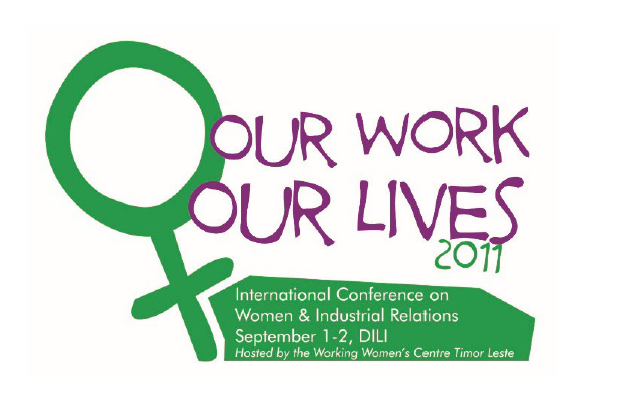
In 2009 -10 the national network of WWCs assisted in the development of the Timor-Leste Working Women’s Centre. The fourth ‘Our Work Our Lives’ conference was held in Dili,Timor Leste in 2011, where the Timorese Working Women’s Centre was formally established and launched.
The WWC TL is still operating and is funded by Union Aid-Abroad APHEDA. The WWC TL mostly services the 70,000 domestic and international domestic servants.
The QLD WWC loses federal funding and merges with Community Legal Centre, Basic Rights Queensland.
The NT WWC faces ongoing funding struggles.
The SA WWC remains the only centre with stable state and federal funding.
The Respect@Work Inquiry was conducted by the Australian Human Rights Commission in 2018–2020 to examine the nature, prevalence, causes and consequences of workplace sexual harassment in Australia, and to identify ways to prevent and better respond to it.
As part of the process, the WWCs in the NT, SA and QLD made a joint submission, drawing on their frontline experience supporting workers to highlight systemic issues and propose reforms.
The Respect@Work report recommends increased and recurrent funding for WWCs. The SA, NT and QLD WWC focus their efforts and campaign hard for the full implementation of this funding.
WWCs play a key role in March4Justice, advocating against gendered workplace violence. March4Justice was a nationwide movement in Australia that began in March 2021, when tens of thousands of people gathered in more than 40 locations to protest gendered violence, sexual harassment, and gender inequality.
The marches were sparked by high-profile workplace sexual assaults and a deep frustration that women’s safety was not improving, and men’s behaviour was not changing. Demonstrators demanded urgent action to end sexual violence, implement all Respect@Work recommendations, strengthen legal protections, and hold institutions and leaders accountable.
The SA, NT and QLD Centres campaigned relentlessly for Recommendation 45 — meeting decision makers, advocating publicly, building coalitions, working with partners, and fronting national media — all while continuing to run services for women. Their efforts led to the Albanese Government committing $32 million to expand and sustain WWCs nationwide
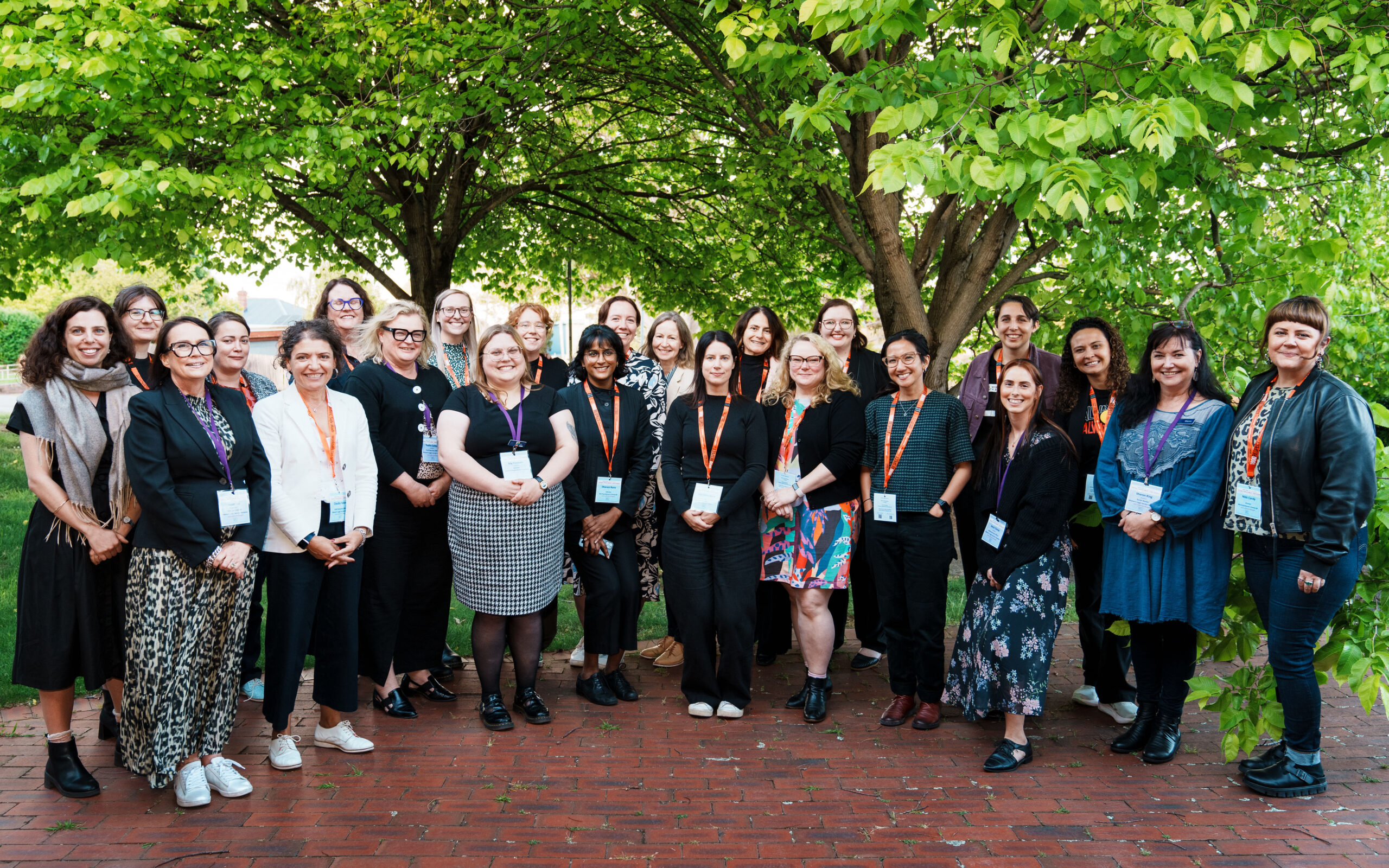
A major milestone was reached with eight Working Women’s Centres now operating across every state and territory in Australia.
Together, the 8 Centres provide a vital safety net for women, offering free and accessible information, support, referrals, and legal representation. They expanded education and workplace training for employers to foster safer and more inclusive environments, while strengthening their advocacy for fairer and more equitable workplaces for women nationwide.
WWC SA establishes the national peak body, Working Women’s Centres Australia, to strengthen coordination and collaboration across the country.